.png)
Students Are Already Using AI — So What Should We Teach Them?
- Feb 7
- 3 min read

"Students are already exploring AI, whether we teach it or not."
This is how I started my presentation at Google for Education's EduDay 2026 at Spectrum International School today, on how I'm continuing to develop AI Literacy with our students at Garden International School.
The focus was on why AI literacy matters in Primary Schools — creating safe, supportive spaces where students can explore AI, modelling healthy and responsible use as educators, and understanding that real safety comes from deep understanding, not avoidance or bans. Ultimately, this prepares students for a future where AI will be a constant presence in both their personal and professional lives.
What is AI?
Firstly, when we begin to share with students more about what AI really is, there are 3 big ideas that are important for them to understand:
𝟭. 𝗔𝗜 𝗰𝗮𝗻 𝗵𝗲𝗹𝗽 𝘂𝘀 𝗱𝗼 𝗶𝗺𝗽𝗼𝗿𝘁𝗮𝗻𝘁 𝘁𝗮𝘀𝗸𝘀
This video is a great starting point to demonstrate clearly how people use AI in their normal lives. Things like facial recognition, voice assistants, translating and navigation apps are relatable examples for students that show how AI helps people.

𝟮. 𝗔𝗜 𝗻𝗲𝗲𝗱𝘀 𝗵𝘂𝗴𝗲 𝗮𝗺𝗼𝘂𝗻𝘁𝘀 𝗼𝗳 𝗱𝗮𝘁𝗮 𝘁𝗼 𝘄𝗼𝗿𝗸 𝘄𝗲𝗹𝗹
Let students experience the game 'Quick, Draw!' as a instantly accessible way to see how machine learning works in action. Millions of people have drawn the same objects as part of this game, in turn contributing to its huge data set. Every doodle from every player becomes training data. The AI uses this data to spots patterns and predict what the player is drawing live. The accuracy of the game's guesses improves as more people play. More data = better results.

𝟯. 𝗔𝗜 𝗹𝗲𝗮𝗿𝗻𝘀 𝗯𝘆 𝗳𝗶𝗻𝗱𝗶𝗻𝗴 𝗽𝗮𝘁𝘁𝗲𝗿𝗻𝘀 𝗮𝗻𝗱 𝗺𝗮𝗸𝗶𝗻𝗴 𝗽𝗿𝗲𝗱𝗶𝗰𝘁𝗶𝗼𝗻𝘀
Teachable Machine is another great way for students to see this hands-on. They give the AI lots of samples (images, sounds, or poses), it then looks for patterns that are shared across all the examples. When shown something new, the AI compares it to learned patterns and makes a prediction about what it is. Better predictions happen when there are lots of varied examples (different angles, lighting, etc).

Responsible Use of AI
Once students have a grasp on what AI is and how it works, they then need to understand how to use it responsibly.
𝟭. 𝗔𝗜’𝘀 𝗼𝘂𝘁𝗽𝘂𝘁𝘀 𝗱𝗲𝗽𝗲𝗻𝗱 𝗼𝗻 𝗶𝘁𝘀 𝗶𝗻𝗽𝘂𝘁𝘀
In the game Say What You See, students study an AI-generated image and describe it using a prompt. The AI generates a new image based only on your description. If your prompt misses key details, the output doesn’t match accurately. Clear input → stronger output.

𝟮. 𝗕𝗶𝗮𝘀 𝗮𝗻𝗱 𝘀𝘁𝗲𝗿𝗲𝗼𝘁𝘆𝗽𝗲𝘀 𝗶𝗻 𝗱𝗮𝘁𝗮 𝗰𝗮𝗻 𝗹𝗲𝗮𝗱 𝘁𝗼 𝘂𝗻𝗳𝗮𝗶𝗿 𝗼𝗿 𝗺𝗶𝘀𝗹𝗲𝗮𝗱𝗶𝗻𝗴 𝗿𝗲𝘀𝘂𝗹𝘁𝘀
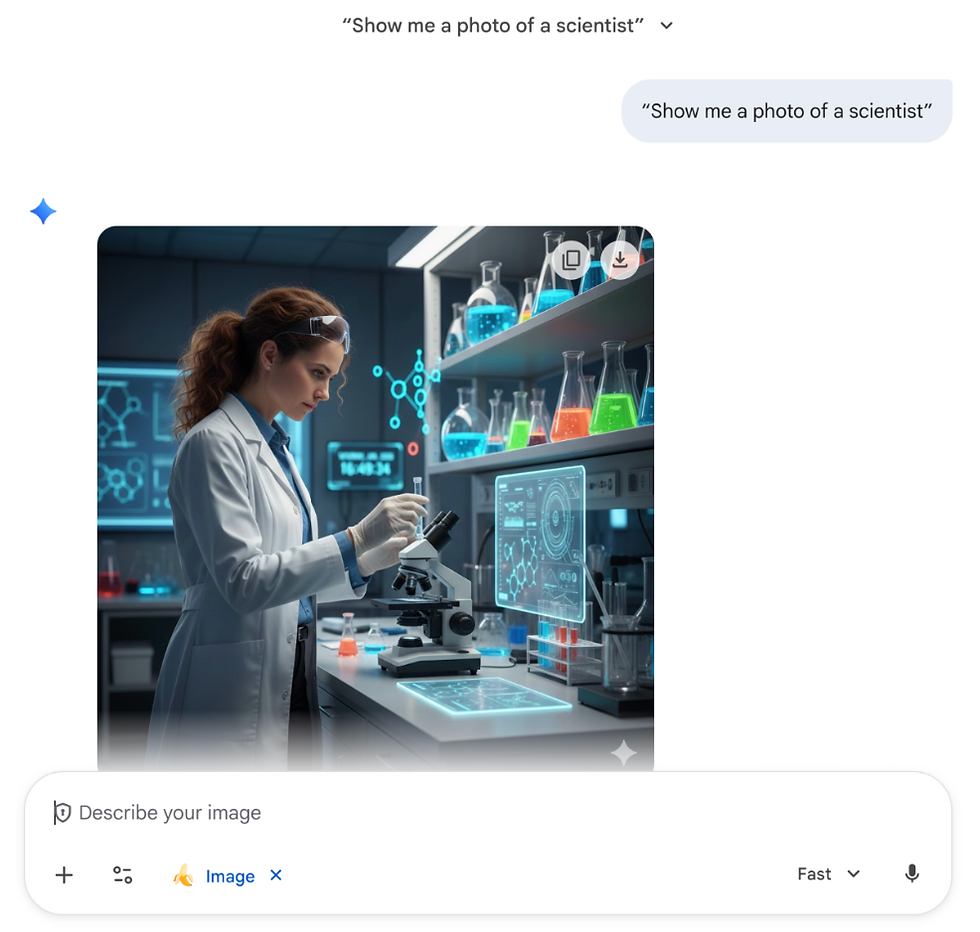
Model using Google Gemini to show how bias can present itself in outputs: “Show me a picture of a teacher”, “Show me a picture of a scientist”, “Write a story about a leader”. Check the outputs and discuss any unfair results (gender, age, ethnicity)
We can share with students that AI is not being intentionally biased, rather it is repeating patterns it has seen most often in its data set. Over-represented groups appear more frequently, under-represented groups can be missing or invisible. Text outputs can also mirror these stereotypes. That’s why as humans we must question results, look for what’s missing and use AI critically, rather than blindly.
𝟯. 𝗔𝗜 𝗰𝗮𝗻 𝗺𝗮𝗸𝗲 𝗺𝗶𝘀𝘁𝗮𝗸𝗲𝘀
Gemini now includes a ‘double check response’ feature. Green highlights show information likely supported by sources, whilst orange highlights show information that may be incorrect, outdated, or unclear Again, this encourages us as users of AI to check sources, compare answers and apply our own judgement.

AI will be a huge part of students’ everyday lives whether we teach it or not. Teaching AI Literacy ensures they grow up as informed, critical thinkers that are prepared for the future ahead of them.


Comments